

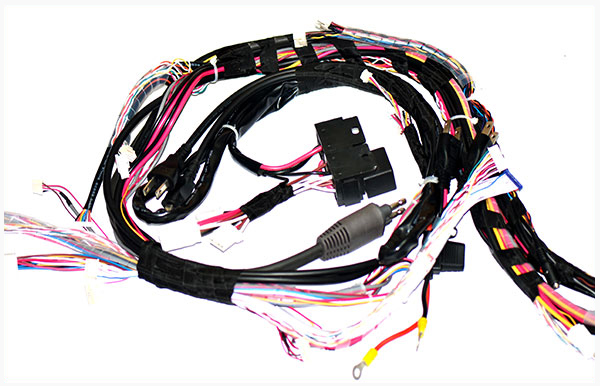
Robot hardware Part of the implementation mainly relies on the wire harness for current information
transmission, which shows the importance of robot wire harness. How about the wire harness processing
plant in the production process What about control?
Robot harness
1、 The robot is mainly composed of four parts: display screen, driver, servo / stepper motor and main
body, and the harnesses used are classified as follows:
1. The display screen mainly uses many screen lines, mainly coaxial bundles, and requires high-precision
equipment to produce connecting lines.
2. The driver is mainly responsible for task transmission, most of which use 1007# /1015 and other
electronic wires, and mainly use terminal blocks to connect equipment.
3. Since the servo motor is constantly moving up and down or left and right in the equipment, it is
necessary to clearly understand the position of the customer's harness when designing the servo
motor harness The number of swings in the equipment is required to avoid interruption in the
process of use, resulting in the failure of normal operation of the equipment.
2、 Through the above analysis, robot harness is mainly divided into two types: electronic harness
and cable processing. Robot harness is usually required in the production processProduct quality
control is carried out as follows:
1. Appearance inspection: the first article inspection must be carried out for terminal crimping. The
first article needs to be judged by taking 3-5 pieces, and the appearance of terminal crimping is good
by visual inspection,Whether there is wire leakage, whether the wire is broken, whether the insulation
layer is punctured or punctured, whether the insulation layer and wire are tightly connected with the
terminal, and whether they are within the specified area.
2. Tension test: the pull-out force test is mainly to test the tightness of the connection between the terminal
and the harness. Through the pull-out force test, it is confirmed that the maximum pull-out force is
Whether it meets the specified requirements, and the formal mass production can be carried out only
after the drawing force meets the requirements. The first piece must be preserved to ensure subsequent
traceability.
transmission, which shows the importance of robot wire harness. How about the wire harness processing
plant in the production process What about control?
Robot harness
1、 The robot is mainly composed of four parts: display screen, driver, servo / stepper motor and main
body, and the harnesses used are classified as follows:
1. The display screen mainly uses many screen lines, mainly coaxial bundles, and requires high-precision
equipment to produce connecting lines.
2. The driver is mainly responsible for task transmission, most of which use 1007# /1015 and other
electronic wires, and mainly use terminal blocks to connect equipment.
3. Since the servo motor is constantly moving up and down or left and right in the equipment, it is
necessary to clearly understand the position of the customer's harness when designing the servo
motor harness The number of swings in the equipment is required to avoid interruption in the
process of use, resulting in the failure of normal operation of the equipment.
2、 Through the above analysis, robot harness is mainly divided into two types: electronic harness
and cable processing. Robot harness is usually required in the production processProduct quality
control is carried out as follows:
1. Appearance inspection: the first article inspection must be carried out for terminal crimping. The
first article needs to be judged by taking 3-5 pieces, and the appearance of terminal crimping is good
by visual inspection,Whether there is wire leakage, whether the wire is broken, whether the insulation
layer is punctured or punctured, whether the insulation layer and wire are tightly connected with the
terminal, and whether they are within the specified area.
2. Tension test: the pull-out force test is mainly to test the tightness of the connection between the terminal
and the harness. Through the pull-out force test, it is confirmed that the maximum pull-out force is
Whether it meets the specified requirements, and the formal mass production can be carried out only
after the drawing force meets the requirements. The first piece must be preserved to ensure subsequent
traceability.


